


How Does Solar Work?
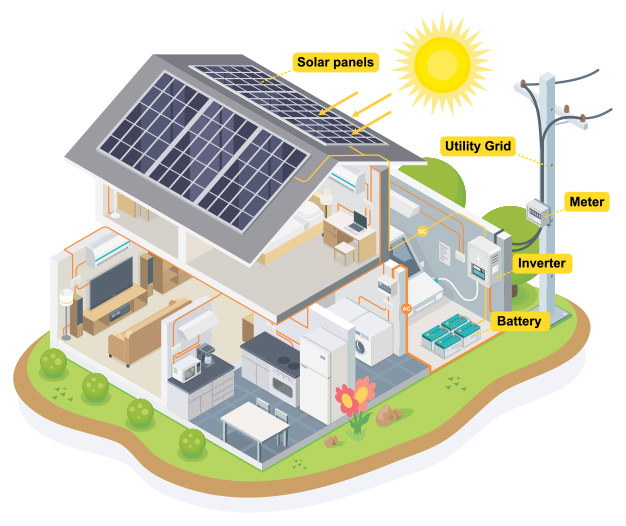
How does it work?
1. Harnessing Solar Energy:
Solar panels employ photovoltaic cells, typically composed of silicon, to capture and convert solar energy into electricity. These cells generate an electric current through the photovoltaic effect when exposed to sunlight.
2. Electricity Production:
When sunlight interacts with the photovoltaic cells, it energizes electrons, initiating a flow of electricity. This electric current is then collected and conducted through wiring integrated within the solar panel.
3. DC to AC Conversion:
Solar panels produce direct current (DC) electricity, which necessitates conversion to alternating current (AC) electricity for compatibility with standard electrical systems. This transformation is accomplished using an inverter, facilitating seamless integration with household and commercial power grids.
4. Advantages of Solar Power:
Solar power offers a sustainable energy solution, reducing dependence on non-renewable resources and mitigating greenhouse gas emissions. Beyond environmental benefits, investing in solar panels yields long-term financial savings by decreasing electricity expenses and enhancing energy self-sufficiency.